
Do Small Restaurants Still Need a Website in 2026?
Updated: May 26

Small restaurants operate in an environment that has become increasingly shaped by digital platforms, search engines, and third-party delivery marketplaces. Customer behavior has shifted significantly over the past decade, and most dining decisions now begin online long before a customer walks through the door or places an order.
At first glance, it may seem that social media pages, Google listings, and delivery apps have replaced the need for a dedicated restaurant website. Many restaurant owners now rely heavily on platforms like Instagram, DoorDash, Uber Eats, or Google Business Profiles to represent their brand online.
However, this shift has also created a new challenge: restaurants no longer fully control how they appear to potential customers. Visibility, branding, and customer experience are increasingly mediated by third-party systems that prioritize their own ecosystems over individual businesses.
This raises a critical question: does a small restaurant still need a website, or has the digital ecosystem evolved past that requirement?
The answer is not only relevant for branding but also directly tied to revenue stability, customer trust, and long-term growth potential.
Table of Contents
Why Some Think Websites Are Less Important?
Despite the long-term value of websites, there are understandable reasons why many restaurant owners believe they are becoming less relevant.
1. Google Business Profiles Provide Basic Information
A well-maintained Google Business Profile now displays essential restaurant details such as hours, reviews, menus, photos, and location. For many users, this is the first and only touchpoint they interact with before making a decision.
Because of this, some owners assume that a standalone website is redundant.
2. Social Media as a Primary Discovery Tool
Instagram, Facebook, X and TikTok have reshaped food discovery. Viral videos, influencer content, and location-based browsing often drive immediate foot traffic. For many small restaurants, social media feels more “alive” and effective than a static website.
This shift leads to the perception that content-driven platforms are replacing traditional websites in importance.
3. Dependence on Third-Party Delivery Platforms
Delivery platforms like DoorDash, Uber Eats, and Grubhub have become primary sales channels for many restaurants. These platforms provide built-in traffic, order management, and payment systems, reducing the perceived need for a separate website.
Because customers can browse menus and place orders directly within these apps, restaurant owners often assume the platform itself is sufficient for online presence.
4. Budget Constraints for Small Restaurants
Many independent restaurants operate with tight margins. Website maintenance, updates, and redesigns can feel like unnecessary expenses compared to more immediate needs such as staffing or food costs.
This cost-driven mindset often leads to deprioritizing website investment.
5. Perception That Websites Do Not Drive Direct Revenue
Unlike delivery apps that show immediate orders or social platforms that generate engagement metrics, websites often lack visible short-term ROI. This creates a misconception that websites are passive assets rather than active conversion tools.
The Role of Restaurant Websites in Local SEO Rankings
A restaurant website plays a foundational role in how search engines understand and rank your business.
Google does not rely solely on Google Business Profile or third-party platforms when determining relevance. Instead, it cross-references multiple data sources, with websites serving as the most authoritative and structured source of information.
A website strengthens local SEO by providing:
Structured location signals
Consistent business information (NAP: Name, Address, Phone)
Content relevance for local keywords
Internal authority that supports Google Maps rankings
Also, a strong website indirectly improves your Google Business Profile performance. When Google detects consistent signals between your website and your listing, it increases trust in your business data, which can improve visibility in local packs.
10 Reasons to Have an Updated Website for Restaurants
An updated restaurant website is not just a digital brochure. It functions as a central trust layer that influences whether a customer chooses to visit, order, or move on to a competitor.
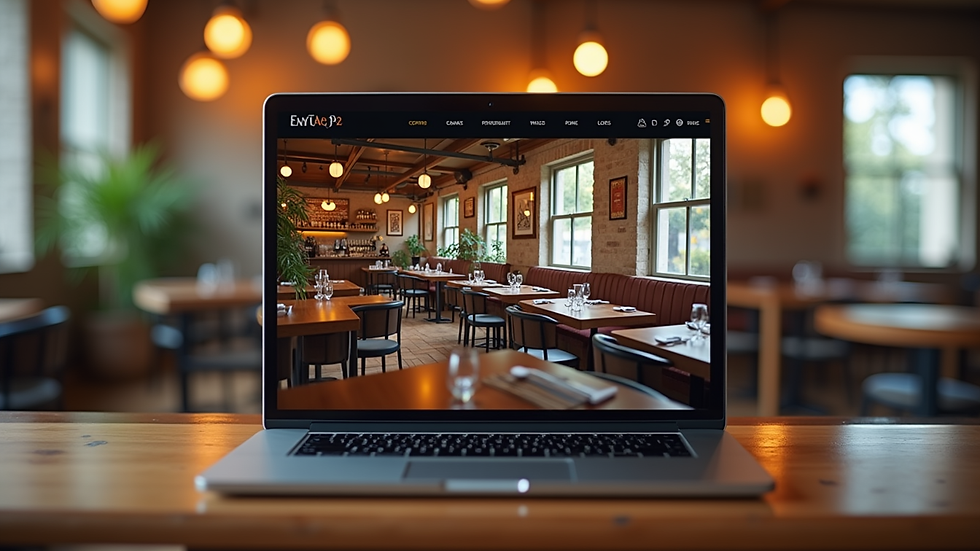
1. You Actually Own It (Full Control, No Algorithm Risk)
Your restaurant’s online presence is probably spread across Google, Instagram, Facebook, Yelp, and delivery apps. That’s where customers discover new restaurants everyday.
However, you don’t actually control any of them.
Your visibility depends on algorithms you can’t see and policies you can’t influence. One update can reduce your reach overnight. A feature you rely on today may disappear tomorrow. Your account can be limited, suspended, or pushed down in rankings without warning. Even something as simple as fewer reviews, lower engagement, or a competitor spending more on ads can impact how often people see your restaurant.
And when that happens, your traffic drops.
Not because your food changed.
Not because your service got worse.
But because another platform changed the rules.
That’s why having your own website still matters.
It’s the only digital asset you fully own and control. You decide how your page design, what content should be highlighted, how your brand story is told, and which integration to use.
This ownership is not just a technical advantage. It creates stability. It ensures that the restaurant always has a reliable place where customers can find accurate information, regardless of how they discovered the business.
2. Brand Story Lives There (Not Just a Menu)
A restaurant is more than food. It is atmosphere, intention, and personality. Your website is where all of that can actually be expressed clearly.
Think of it like your physical restaurant interior. The lighting, music, furniture, and layout all tell customers something about your taste and standards. Your website works the same way online.
Accurate and up-to-date information reflect your story as a founder: why you started the restaurant, what inspires your menu, and what makes your approach different.
Clear branding and story that showcase behind-the-scenes content like food preparation, kitchen philosophy, seasonal menu development, or special events.
Direct communication channels like contact forms or newsletter sign-ups.
No distractions or competing ads that can appear on social media or delivery platforms.
While social media can share moments, it is limited by format and fast scrolling behavior. A website allows you to organize your story properly and give customers a deeper understanding of your brand without distractions. It becomes a place where your identity is not just shown, but felt.

3. Building Trust Before a Customer Walks In
Trust is one of the most important factors in restaurant decision-making, especially for higher-end dining or special occasions.
Before people spend money at a restaurant, they often look it up. They want to confirm what kind of experience they will get. This is especially true for:
High-end restaurants and steakhouses
Family gatherings and celebrations
Business dinners or important meetings
Customers with dietary restrictions or specific expectations
If you don't have a professional website, customers may hesitate. They will rely only on third-party reviews or delivery apps, which rarely tell the full story.
4. Improving Local Search and AI Search Visibility
Search behavior has changed. Customers are no longer only using Google—they are also using AI tools and voice search to find restaurants.
In both cases, websites still play a central role.
Search engines and AI systems rely heavily on website content to understand what your restaurant offers. Without a strong website, your business becomes harder to categorize, recommend, or surface in local results.
If you want your restaurant to appear in “best near me” searches or AI-generated recommendations, your website needs to clearly communicate:
Location and service area
Menu categories and specialties
Cuisine type and dining style
Updated business information
Without this foundation, even strong reviews or social media activity may not fully translate into visibility in search results.
An updated website ensures search engines and AI systems can confidently recommend your restaurant to the right customers.
5. It Reduces Long-Term Dependence on Paid Platforms
Many restaurants rely heavily on third-party delivery apps or paid visibility tools to generate consistent orders. While these platforms provide exposure, they also come with long-term costs that gradually reduce profit margins.
A website helps create balance in this system. It allows restaurants to build direct channels with their customers instead of relying entirely on rented traffic.
Over time, this enables more sustainable marketing strategies such as direct ordering, repeat customer engagement, and brand-driven traffic rather than commission-based platforms. The result is not just more control, but better long-term financial efficiency.
6. It Supports Online Ordering and Reservations
While delivery apps are popular, many restaurants want to reduce fees and keep customer data. A website with integrated online ordering or reservation systems offers this advantage. Customers can:
Order directly from the restaurant without extra charges.
Book tables easily with real-time availability.
Receive confirmation emails or texts for peace of mind.
For instance, a small sushi bar in Seattle added an online reservation system to its website. This reduced phone calls and no-shows, improving overall efficiency.
7. Cost and Maintenance Are More Affordable Than Ever
Building and maintaining a website no longer requires a big budget or technical skills. Many platforms offer easy drag-and-drop builders, templates, and affordable hosting. Some even provide restaurant-specific features like menu layouts and booking widgets.
Tips to keep costs low:
Use website builders like Wix, Squarespace, or WordPress with restaurant themes.
Update menus and hours regularly to avoid outdated info.
Use free or low-cost tools for SEO and analytics.
Consider hiring freelancers for occasional help instead of full-time staff.
Investing a few hundred dollars a year can bring a strong online presence that pays off in customer loyalty and orders.

8. It Helps Restaurants Compete Against Chains
Large restaurant chains benefit from brand recognition, marketing budgets, and established digital systems. Independent restaurants often compete in the same search environment but without the same level of visibility.
A well-structured website helps level this playing field.
It allows smaller restaurants to:
Rank for local search terms
Build brand authority in their neighborhood
Compete for high-intent search traffic
Present a more professional digital presence
Search engines do not prioritize size—they prioritize relevance and authority. A strong website helps independent restaurants build both.
A Website Is No Longer Optional for Growth-Focused Restaurants
For small restaurants competing in 2026, visibility is not the only challenge. The real challenge is control over how that visibility converts into customers.
A website provides that control.
It acts as the central foundation of a restaurant’s digital presence, ensuring that every discovery channel leads to a consistent, trustworthy, and conversion-ready experience.
Restaurants that rely only on third-party platforms operate within systems they do not control. Restaurants with a strong website operate with ownership, stability, and long-term brand equity.
The difference becomes more significant over time, especially in competitive local markets where customer attention is limited and decision-making happens quickly.
For restaurant owners evaluating their next stage of growth, the question is not whether a website is still relevant. The real question is whether they can afford to compete without one.
If your restaurant is looking to strengthen its online presence, improve visibility in local search, and build a more direct path to customers, Prome Digital Growth specializes in helping restaurants build and optimize digital systems designed for long-term growth. To learn more about our strategic restaurant marketing solutions connect with our team to discuss your goals.
Comments