
How to Rank Higher on DoorDash Restaurant Owner Playbook

DoorDash can feel like a crowded street where every restaurant is calling for attention at the same time. A customer opens the app hungry, scans for a few seconds, and chooses the restaurant that looks reliable, fast, tasty, and worth the delivery fee. If your listing does not earn that click, the quality of your food may never get a chance to matter.
Ranking higher on DoorDash is not about one trick. It is the result of many small signals working together. Your menu has to match what people search for. Your photos have to make the food easy to want. Your store has to stay available during demand peaks. Your kitchen has to prepare orders accurately and on time. Your reviews have to prove that the experience holds up after the handoff.
DoorDash does not publish its full ranking system, and no outside agency can honestly promise a specific placement. What restaurant owners can control is the strength of the signals that marketplaces commonly reward: relevance, availability, customer satisfaction, order volume, speed, accuracy, and repeat demand.
This playbook gives you a practical way to improve those signals without guessing. It is written for restaurant owners, operators, and marketing teams that want more delivery orders from the platform while protecting margins and brand reputation.
Table of Contents
What DoorDash is Likely Trying to Rank
DoorDash wants customers to place orders, receive them on time, enjoy the food, and come back. That means the marketplace has to balance customer preference with operational reliability.
A restaurant that looks great but cancels orders hurts the customer experience. A restaurant with fast prep times but unclear menu items may not convert. A restaurant with low ratings may get traffic, but it can lose trust before checkout.
A useful way to think about DoorDash visibility is through five broad ranking signal groups.
Ranking signal group | What it means for restaurants | What to improve first |
Relevance | Your menu matches the customer’s search, filters, cravings, and location | Menu names, item descriptions, categories, cuisine tags |
Conversion | Customers who see your listing click, add items, and check out | Photos, pricing, best sellers, bundles, delivery appeal |
Reliability | Orders are accepted, prepared accurately, and ready near the estimated time | Tablet workflow, prep times, item availability, packaging |
Customer satisfaction | Customers rate the experience well and avoid complaints | Food quality, order accuracy, refunds, review response process |
Demand | The restaurant builds sales history, repeat orders, and peak-hour traction | Promotions, featured items, retention, local reputation |
This matters because many restaurants focus only on promotions. Discounts can create short-term order volume, but they do not fix weak photos, confusing menus, slow prep times, or poor review patterns. If the foundation is weak, paid pushes can turn into expensive lessons.
A better goal is to make your DoorDash store easy to trust and easy to order from.
Build a Listing That Matches How Customers Search
A DoorDash menu is not the same as a dine-in menu. In the restaurant, a server can explain the dish. On the app, your words and photos have to do the selling.
Customers search and browse in simple terms. They type things like “chicken sandwich,” “tacos,” “pad thai,” “burger,” “salad,” “wings,” “vegan,” “breakfast burrito,” or “family meal.” If your menu names are too clever, too vague, or too dependent on in-person context, your listing becomes harder to match with intent.
Use clear item names before creative names
A creative name can support your brand, but the food type needs to be clear.
A weak DoorDash item name might be:
The Midtown
Grandma’s Favorite
Fire Bowl
House Special
Those names may work inside your restaurant. On a delivery app, they make the customer work too hard.
Better names give the app and the customer real context:
Crispy Chicken Sandwich
Spaghetti and Meatballs
Spicy Chicken Rice Bowl
House Special Beef Tacos
You can still include your signature language, but put the searchable food term first. “Crispy Chicken Sandwich with House Hot Honey” is stronger than “The Hot Honey Hero” because it explains the dish before the customer loses interest.
Write descriptions that answer buying questions
DoorDash descriptions should be short, specific, and useful. A good description helps customers understand flavor, portion, ingredients, heat level, and what comes with the item.
A weak description says:
“Delicious house favorite.”
A stronger description says:
“Grilled chicken over cilantro-lime rice with black beans, roasted corn salsa, avocado crema, and pickled onions.”
That description does more than sound appetizing. It sets expectations. It may reduce special requests. It may reduce complaints from customers who misunderstood the dish.
For high-volume items, include practical details when relevant:
Protein choice
Sauce style
Spice level
Included sides
Common allergens when appropriate
Whether the item travels well
Serving size cues such as “serves two” or “12 wings”
Do not overload every item with a long paragraph. Customers scan quickly. The best descriptions are clear enough to sell and short enough to read on a phone.
Organize categories around decision-making
Many restaurants copy their printed menu into DoorDash. That can create a long, uneven menu with too many categories and too much scrolling.
A delivery menu should help customers decide quickly. Group items in a way that fits how people order at home:
Popular items
Combos
Family meals
Bowls
Sandwiches
Entrees
Sides
Desserts
Drinks
Sauces and add-ons
The “Popular items” or equivalent section matters because customers often trust what other people buy. If your best items are buried, you may lose orders before customers reach them.
Place high-margin, delivery-friendly, repeatable items near the top. That does not mean hiding the rest of the menu. It means leading with dishes that are most likely to create a good delivery experience.
Make Your Photos Do Real Selling Work
Food photos are one of the biggest controllable factors in DoorDash performance. A customer cannot smell the food, see the dining room, or ask a server for recommendations. A photo has to carry that weight.
Poor photos create doubt. Missing photos create friction. Great photos make the order feel safer.

Photograph the delivery version of the food
Many restaurants use plated dine-in photos for delivery items. That can backfire if the delivered item looks different. The customer judges the experience against what they saw in the app.
For DoorDash, photograph the food as close as possible to how it arrives:
Use the actual container when it makes the item more honest and appealing.
Show sauces in cups if they ship separately.
Avoid garnishes that the kitchen will not include in every order.
Keep portions consistent with what customers receive.
This builds trust. A realistic photo can outperform an overly styled photo if it makes the dish easy to understand.
Invest more in best sellers
You do not need an expensive shoot for every single item at once. Start with the items that influence the most revenue.
Prioritize photos for:
Top-selling entrees
High-margin items
Combos and bundles
Family meals
Items customers may not understand by name alone
New dishes you want to test
Desserts and drinks that raise average order value
If a popular item has no photo, fix that before adding another discount. A strong image can raise confidence every time the item appears.
Keep photos clean and honest
Good delivery food photography usually has three jobs:
Show what the item is.
Show the portion in a believable way.
Make the texture and freshness visible.
Avoid dark lighting, cluttered backgrounds, heavy filters, and tight crops that hide the size of the item. Also avoid using manufacturer photos or images that do not match your kitchen’s version. Misleading photos may create first orders, but they also invite refunds, bad reviews, and lower repeat demand.
Improve Conversion Before Spending More on Promotions
Traffic is only valuable if customers order. Many restaurants try to buy visibility before they fix the reasons customers leave the page.
Conversion on DoorDash can be influenced by several listing elements:
Main photo
Ratings and review patterns
Delivery time estimate
Delivery fee perception
Menu clarity
Item prices
Promo visibility
Minimum order friction
Availability of popular items
Trust in packaging and accuracy
If your store gets views but few orders, do not assume the platform is the problem. The listing may not be answering the customer’s silent questions.
Make the first screen count
The first screen of your DoorDash listing should make the customer feel oriented. They should quickly understand what you sell, what is popular, and whether the food fits their craving.
The top of your menu should not feel random. Lead with sections that help people make fast decisions. If dinner customers usually order entrees and combos, do not force them to scroll through sides, catering trays, or low-demand items first.
A strong first screen often includes:
A clear hero image or strong item photo
Popular dishes near the top
Simple category names
Combos that remove decision fatigue
Add-ons that fit the main item
This is especially valuable for independent restaurants that do not have national brand recognition. Customers need confidence before they commit.
Use bundles with a real purpose
Bundles can help because delivery customers often want a complete meal. A burger alone may feel incomplete. A burger, fries, and drink combo feels easier to order.
Good bundles are not just random items grouped together. They should reflect how people already buy.
For example:
Chicken sandwich, fries, and drink
Two rice bowls and two drinks
Taco party box with chips and salsa
Family pasta meal with salad and bread
Wings bundle with fries and dipping sauces
Bundles can improve average order value and reduce decision friction. They can also protect margins better than blanket discounts when priced carefully.
Price for delivery without shocking the customer
Third-party delivery has different costs than dine-in service. Many restaurants adjust DoorDash pricing to account for platform fees, packaging, and labor. That can make sense, but large price gaps may hurt conversion if customers feel the listing is too expensive.
The goal is not always to be the cheapest. The goal is to make the value clear.
If your prices are higher on DoorDash, strengthen the offer with:
Better item photos
Clear portion descriptions
Meal bundles
Add-ons that make sense
Consistent quality
Packaging that travels well
A customer may accept a higher price when the meal feels reliable and complete. They resist when the listing feels vague or risky.
Run the Kitchen in a Way the Marketplace Can Trust
DoorDash visibility is not only a marketing issue. Operations matter because the platform has to protect the customer experience.
Late orders, cancellations, missing items, and unavailable menu items can weaken performance. They also hurt the customer directly. Each failed order teaches the customer not to trust your restaurant the next time it appears.
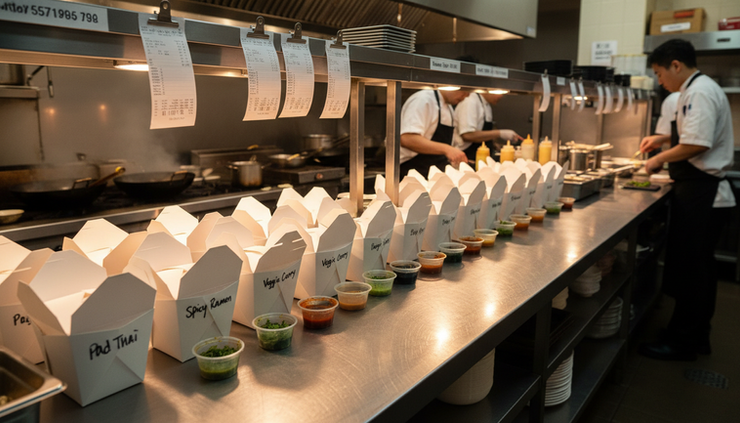
Set prep times that match reality
Underestimating prep time can create a chain reaction. The Dasher arrives too early, the kitchen rushes, staff feel pressure, the order may leave incomplete, and the customer waits longer than expected.
Overestimating prep time can also hurt because customers may choose a faster option.
The best prep time is honest and data-based. Review prep performance by daypart:
Lunch rush
Dinner rush
Late night
Weekends
Bad weather spikes
Staff shortage periods
Large order windows
If Friday dinner has a different reality than Tuesday lunch, your workflow should reflect that. Restaurant teams often know the pattern from experience, but they do not always update the delivery settings or internal procedures to match it.
Keep item availability current
Few things frustrate customers more than ordering an item, waiting, and then learning it is unavailable. An unavailable item can lead to substitutions, delays, cancellations, refunds, and poor reviews.
Build a system for marking items unavailable as soon as the kitchen knows. Assign responsibility by shift. Do not leave it vague.
A simple process can work:
The kitchen identifies a sold-out item.
The shift lead confirms whether it is unavailable for the rest of the day or only temporarily.
The assigned person updates DoorDash immediately.
Staff check the next few orders to prevent missed substitutions.
The item returns only when inventory is ready.
This is not glamorous work, but it protects trust.
Design packaging for the delivery trip
Packaging affects reviews more than many owners realize. Food can leave the kitchen hot, crisp, and correct, then arrive soggy or messy because the packaging traps steam or lets items shift.
Test your own delivery experience. Order from your restaurant during a real shift and evaluate the meal at home.
Look for:
Fries or fried items losing texture
Sauces leaking into bags
Cold and hot items packed together
Containers bending under weight
Seals breaking too easily
Items arriving without utensils or napkins
Drinks spilling near food
Missing condiments
A strong packaging system can reduce complaints and refunds. It can also justify pricing because the customer receives a meal that feels cared for.
Treat Reviews as Ranking Assets, Not Just Feedback
Reviews are public proof. They influence customers before they order, and they may influence marketplace trust over time.
A restaurant with a slightly higher price and strong reviews may beat a cheaper restaurant with uncertain quality. Customers are often willing to pay more to avoid disappointment.
Read reviews for patterns
Do not treat every review as an isolated event. Look for repeated themes.
Common negative patterns include:
Missing sauces
Cold food
Small portions
Late delivery
Wrong items
Poor packaging
Food not matching photos
Special instructions ignored
Common positive patterns include:
Fast preparation
Fresh ingredients
Large portions
Good packaging
Consistent flavor
Accurate orders
Great value
Patterns tell you what to fix first. One complaint about a missing sauce may be random. Ten complaints about missing sauces point to a system problem.
Respond with calm, specific language
When DoorDash allows merchant responses, use them carefully. A good response is not defensive. It shows that the restaurant is paying attention.
A strong response might say:
Thank you for letting us know. We reviewed our packing process for sauce cups after reading this and added an extra check before bags are sealed.
That kind of response is useful because future customers can see ownership. It does not argue with the reviewer. It does not blame the Dasher. It focuses on the part the restaurant controls.
Ask for reviews without pressuring customers
DoorDash has its own policies and customer experience rules, so stay within the platform’s guidelines. Do not offer rewards in exchange for positive reviews. Do not pressure customers.
What you can do is create an experience worth reviewing. You can also add a simple, compliant message on packaging, if allowed by the platform and your local rules, such as:
“Thanks for ordering from us. If everything was great, a review helps our kitchen team more than you know.”
The best review strategy starts with accuracy and consistency. Asking for reviews will not help if the order experience is uneven.
Use Promotions with Margin Discipline
Promotions can help increase sales volume and attract new customers, but they can also train customers to wait for discounts. They can raise order counts while lowering profit. They can make a weak listing look busy for a short time without building lasting demand.
Use promotions as part of a plan, not as a panic button.
Match the promotion to the goal
Different goals call for different offers.
If the goal is first-time trial, a limited discount on a popular item may work. If the goal is higher average order value, a bundle or free item above a minimum order can be better. If the goal is repeat orders, a strong experience matters more than a heavy discount.
Before launching a promotion, answer three questions:
Which customer behavior are we trying to create?
Which menu items can support the discount without hurting the kitchen?
How will we know if the promotion brought profitable orders?
If you cannot answer those questions, wait before spending.
Promote items that can handle volume
Do not push a fragile item that travels poorly or slows down the kitchen. Promotions should feature items that are repeatable, profitable, and delivery-friendly.
Strong promotion candidates often have:
Reliable prep process
Strong photos
Good margins
Broad appeal
Few customization problems
Good packaging fit
Positive review history
Weak promotion candidates usually create complaints when volume rises. If an item is already causing issues at normal order levels, a promotion will magnify the problem.
Watch the full cost
A DoorDash order may include food cost, labor, packaging, platform fees, discounts, remakes, refunds, and lost capacity during rush periods. A promotion that looks successful in order count can still lose money.
Track promoted orders separately when possible. Compare average order value, refund rate, repeat behavior, and kitchen load. The winning promotion is not always the one with the most orders. It is the one that brings customers you want to serve again.
Build Repeat Demand Beyond the First Order
Higher placement is easier to maintain when customers keep choosing your restaurant. Repeat demand sends a strong signal that the experience works.
A first order comes from visibility and trust. A second order comes from satisfaction.

Make the unboxing experience consistent
Delivery customers notice details. They notice whether the bag is sealed, whether the sauces are included, whether the fries are crisp, whether the drink is secure, and whether the food looks like the photo.
Small details can create loyalty:
Clearly labeled items for group orders
Sauce cups packed securely
Hot and cold items separated
Napkins and utensils included when needed
A clean receipt or item checklist
Tamper-evident packaging
Consistent portioning
This is not about adding waste or cost for its own sake. It is about reducing uncertainty. A customer who trusts your delivery experience is more likely to reorder.
Use inserts carefully
If platform rules allow inserts, keep them simple and useful. Do not push customers to violate marketplace rules. Do not make aggressive claims.
Good insert ideas include:
A thank-you note
Reheating instructions for pizza, pasta, or baked goods
A short message about popular items
A reminder to favorite the restaurant in the app if they enjoyed the meal
The insert should feel like hospitality, not spam.
Protect signature items
Every restaurant has a few dishes that shape reputation. On DoorDash, those dishes need extra attention because new customers often start there.
Give signature items a higher standard:
Best photo quality
Most accurate description
Strong packaging test
Clear modifier choices
Staff awareness during busy shifts
Frequent review monitoring
If a signature item travels poorly, rethink the delivery version. That might mean packing sauce separately, changing garnish, adjusting cook time, or offering a delivery-only version that holds better.
Understand the Role of Distance and Availability
Some ranking factors are outside your direct control. A restaurant farther away from the customer may be less likely to appear above closer options, especially when delivery times are longer. Weather, Dasher availability, local demand, and customer location can all affect visibility.
That does not mean owners are powerless. It means you should focus on the controllable parts of the experience.
Stay open when demand is strong
Availability matters. If your DoorDash store is paused or closed during high-demand periods, you miss sales history during the windows that may matter most.
Review when your customers order delivery. For many restaurants, strong windows include:
Weeknight dinner
Friday and Saturday night
Sunday evening
Lunch near work areas
Rainy days
Major sports events
Late-night windows, if the menu fits
Do not stay open just to be open. If staffing or inventory cannot support delivery, poor service can hurt more than being closed. The goal is to be available when you can perform well.
Use delivery-only hours with care
Some restaurants extend delivery hours beyond dine-in hours. This can work if the menu is simple and the team can handle it. It can fail if late orders receive lower-quality execution.
A delivery-only hour should have:
Limited menu
Clear staffing ownership
Reliable prep times
Proper packaging supplies
A plan for sold-out items
Manager review of performance
If those pieces are missing, extended hours may create low-rated orders that weaken trust.
Measure the Numbers That Actually Guide Decisions
DoorDash provides merchant tools and reporting that may vary by market, account type, and time. Use whatever data is available, but focus on numbers that lead to better decisions.
Do not only watch total sales. Total sales can hide problems.
Track the path from view to repeat order
The most useful performance questions are simple:
Are more customers seeing the store?
Are those customers clicking?
Are they adding items?
Are they completing checkout?
Are orders accurate and on time?
Are ratings holding steady?
Are customers coming back?
Are promoted orders profitable?
This path helps you find the weak link. If visibility is low but conversion is strong, you may need demand-building or sponsored placement. If visibility is high but conversion is weak, fix photos, prices, menu structure, and reviews. If orders are strong but ratings fall, operations need attention before growth.
Create a weekly DoorDash scorecard
A weekly scorecard keeps the team honest. It does not need to be complex. Review the same set of measures each week and connect them to real decisions.
Useful weekly review areas include:
Total DoorDash sales
Number of orders
Average order value
Top-selling items
Items with complaints
Cancellations
Refunds or error reports
Average prep performance
Rating trends
Promo results
Sold-out item frequency
Customer comments
The value is in the conversation. If one item sells well but draws complaints, fix it. If a bundle raises average order value without hurting prep times, keep testing it. If a promotion brings many low-margin orders and no repeat behavior, change it.
Know When Sponsored Placement Makes Sense
DoorDash may offer paid options such as sponsored listings or other advertising products. These can help restaurants gain visibility, especially in competitive categories. But paid placement works best when the listing is already strong.
If your photos are weak, ratings are shaky, and prep times are unreliable, paying for more exposure can simply bring more people into a poor experience.
Before spending on sponsored placement, make sure:
Best sellers have strong photos
Menu names are clear
Descriptions set expectations
Ratings are stable
Kitchen can handle added order volume
Packaging protects quality
Promotions have margin limits
You know what result would count as success
Paid visibility should amplify a working store. It should not cover up basic issues.
Build a Practical 30-Day Improvement Plan
A restaurant owner does not need to fix everything at once. The smartest path is to improve the highest-impact parts in order.
Phase 1: Days 1 through 7 should focus on the listing foundation
Start by reviewing the customer-facing store page as if ordering for the first time. Use a phone, not a laptop. Search your cuisine category and compare your listing with nearby competitors.
During the first week:
Rewrite unclear item names.
Improve descriptions for top sellers.
Move popular and profitable items higher.
Remove or hide items that do not travel well.
Check item availability settings.
Confirm store hours and prep settings.
Identify missing photos for best sellers.
This week is about reducing confusion. If customers cannot quickly understand the offer, other improvements will have less impact.
Phase 2: Days 8 through 14 should focus on photos and conversion
Next, improve the visuals and buying experience. Photograph top items in delivery-ready form. Update the menu order so the best items are easy to find.
During this stage, review:
Main listing image
Top five item photos
Combo structure
Add-on options
Dessert and drink placement
Price perception
Portion clarity
Modifier complexity
Too many modifiers can slow ordering and increase mistakes. Keep customization useful, but avoid turning every item into a maze.
Phase 3: Days 15 through 21 should focus on operations
Once the listing looks stronger, protect the experience. Watch actual DoorDash orders during rush periods. Talk to the kitchen and front-of-house staff about recurring friction.
Look for:
Orders waiting too long before acceptance
Dashers arriving before food is ready
Staff forgetting drinks or sauces
Items packed in the wrong containers
Confusing tickets
Sold-out items still listed
Large orders slowing the line
Fixing these issues can improve ratings and reduce refunds. It also helps staff feel less overwhelmed.
Phase 4: Days 22 through 30 should focus on growth tests
After the foundation is in better shape, test growth. Choose one or two controlled experiments instead of changing everything.
Possible tests include:
A combo for your best-selling entree
A free add-on above a minimum order
A limited promotion on a high-margin item
A new family meal
A sponsored listing test with a clear budget
A delivery-only version of a popular dine-in item
Measure results by profit quality, not only order count. A smaller number of strong orders may be better than a rush of discounted orders that strain the kitchen.
5 Mistakes That Keep Restaurants Buried on DoorDash
Many restaurants do not struggle because their food is bad. They struggle because the app experience does not reflect the quality of the kitchen.
Here are 5 common mistakes that weaken DoorDash performance.

Mistake 1: The menu is too large
A huge menu can create decision fatigue and kitchen strain. It can also increase the chance of unavailable items, inconsistent prep, and order errors.
A tighter delivery menu often performs better because it focuses on items that travel well and sell well.
Mistake 2: Photos are missing or inconsistent
A menu full of blank image spaces feels risky. A menu with mismatched photos feels careless. Customers want confidence before ordering from a restaurant they may not know.
Mistake 3: The restaurant discounts before fixing trust
Promotions can create a temporary spike, but they cannot build long-term demand if food arrives late, cold, incomplete, or different from the photo.
Mistake 4: Staff treat DoorDash as separate from the brand
Delivery customers are still customers. They may dine in later, recommend the restaurant, or leave public feedback. A careless delivery order can damage the same reputation the dining room works hard to build.
Mistake 5: Assuming ads equal organic ranking
Sponsored visibility and organic marketplace visibility are not the same thing.
Paid campaigns can increase exposure, but restaurants still need strong menus, ratings, operations, and customer experiences.
What Experience Teaches About Food Delivery Growth
Restaurants that grow on online food delivery platforms usually share a few habits. They do not treat the marketplace as a passive sales channel. They manage it like a second storefront.
That mindset changes the work.
The menu becomes a sales tool, not just a list. Photos become trust builders, not decoration. Packaging becomes part of hospitality. Prep times become promises. Reviews become operating data. Promotions become controlled tests.
The restaurants that struggle often chase visibility before they are ready for it. They want more impressions, but the listing does not convert. They want more orders, but the kitchen cannot keep up. They want better rankings, but customers keep reporting the same issues.
The stronger path is slower at first, but more durable. Fix the store. Improve the food presentation. Protect the delivery experience. Measure what happens. Then push for more demand.
That is the real playbook for a stronger DoorDash restaurant ranking.
Final Thoughts With a Better Path to More DoorDash Orders
Ranking higher on DoorDash is not one setting, one promo, or one photo. It is the combined effect of relevance, trust, consistency, and demand. The restaurants that win are usually the ones that make ordering feel easy and make delivery feel reliable.
Start with what customers see. Then fix what customers experience. After that, use promotions and paid placement with a clear plan. This order matters because growth only helps when the restaurant is ready to keep the customers it attracts.
If your DoorDash sales have stalled, or if orders are coming in without enough profit, the next step is a structured review of your listing, menu, photos, pricing, reviews, and delivery operations. Our team helps restaurants turn third-party delivery channels into stronger sales engines with clear strategy, hands-on improvements, and performance tracking.
To learn more about our services or talk through what is holding your DoorDash store back, contact us and ask for a delivery marketplace audit. A better listing can bring more than higher placement. It can bring better orders, happier customers, and a channel your restaurant can grow with confidence.


Comments